
- Abbreviation: TAFAntiretroviral Subclass:Nucleoside reverse transcriptase inhibitors
Background
- U.S. Manufacturer:
Approval
Tenofovir alafenamide (TAF) was approved by the FDA in 2015 as part of a coformulation that also includes the integrase inhibitor elvitegravir, the pharmacokinetic enhancer cobicistat, and the nucleoside analogue emtricitabine. Since then it has been approved as part of other coformulations; it is not available as a single agent.
Approval of the coformulation of TAF with elvitegravir, cobicistat, and emtricitabine was based primarily on 2 randomized, placebo-controlled Phase 3 studies showing that initial treatment with the single-pill combination resulted in rates of HIV viral suppression that were comparable with those achieved by the coformulation of elvitegravir + cobicistat + emtricitabine + tenofovir disoproxil fumarate (TDF).(1)
TAF is a prodrug of tenofovir; a different tenofovir prodrug, TDF, was approved for treatment of HIV in 2001 (see Tenofovir Disoproxil Fumarate) for more information). Administration of TAF results in higher concentrations of tenofovir in tissues but lower concentrations in plasma than does treatment with TDF; the clinical significance of this is not yet clear.
Formulations and Dosing
TAF is currently available only in coformulations with other drugs: with emtricitabine (Descovy), with bictegravir + emtricitabine (Biktarvy), darunavir + cobicistat+ emtricitabine (Symtuza), elvitegravir + cobicistat + emtricitabine (Genvoya), and with rilpivirine + emtricitabine (Odefsey).
- There are no food restrictions.
- No dosage adjustment is required is required for patients with creatinine clearance =<<this should be > or = >> 30 mL/min. Not recommended for patients with creatinine clearance <30 mL/min.
- TAF has not been studied in patients with severe (Child-Pugh Class C) liver disease.
- TAF interacts with other medications; dosage adjustments may be required and certain combinations are contraindicated.
- Please consult product labeling for detailed dosing information.
Adult Dosing - see dosing of specific coformulations --<<how to handle dosing given only in coformulations?>>
Pediatric Dosing – see dosing of specific coformulatios tablets
Coformulations
Emtricitabine / Tenofovir alafenamide (Descovy)
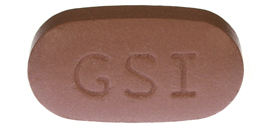 BIC 50 mg, FTC 200 mg, TAF 25 mgImage
1 tablet daily Film-Coated Tablets 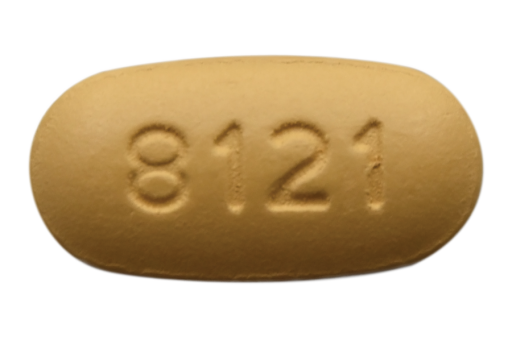 DRV 800 mg, COBI 150 mg, FTC 200 mg, TAF 10 mgImage
1 tablet daily Film-Coated Tablets 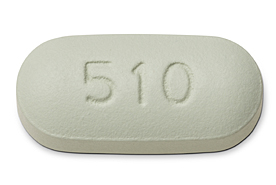 EVG 150 mg, COBI 150 mg, FTC 200 mg, TAF 10 mgImage
1 tablet daily Tablet 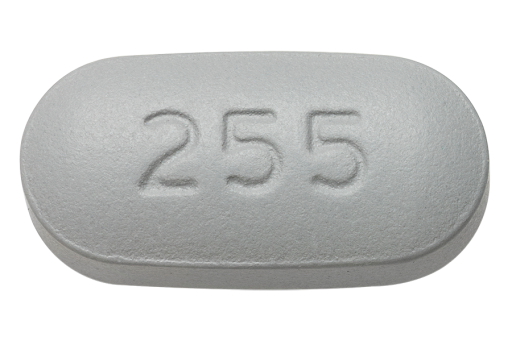 FTC 200 mg, RPV 25 mg, TAF 25 mgImage
1 tablet daily Film-Coated Tablets

Clinical Use
Initial vs Subsequent Therapy
Adult and adolescent treatment guidelines of the U.S. Department of Health and Human Services (DHHS) designate a number of TAF-containing regimens as "recommended" regimens for initial therapy.
TAF initially was studied as part of the fixed-dose combination of elvitegravir/cobicistat/emtricitabine/TAF, which includes 10 mg of TAF. In the Phase 3 studies of initial therapy mentioned above, TAF in this single-pill combination was compared with TDF in the fixed-dose combination of elvitegravir/cobicistat/emtricitabine/TDF.(1) In combined analysis of the two studies, by FDA snapshot analysis, 92% and 90% of study subjects, respectively, had HIV RNA levels of <50 copies/mL at 48 weeks; the difference was not statistically significant. The two ARV regimens yielded similar rates of HIV suppression in patients with pretreatment HIV RNA levels of >100,000 copies/mL and those with =100,000 copies/mL. CD4 cell increases were 230 cells/µL for the TAF group and 211 cells/µL for the TDF group.
In treatment-naive patients, a Phase 2 placebo-controlled trial compared a single pill combination of darunavir/cobicistat/emtricitabine/TAF to darunavir + cobicistat + emtricitabine/TDF, each given once daily. After 48 weeks of treatment, HIV RNA was <50 copies/mL in 77% and 84% of the groups, respectively; the difference was driven by a higher rate of treatment discontinuation in the TAF arm rather than by disparities in virologic efficacy.(2)
In a randomized double blind Phase 3 study, patients on a virologically suppressive regimen of TDF/emtricitabine + a third agent either switched to TAF/emtricitabine or remained on TDF/emtricitabine; all continued their third agent. After 48 weeks, HIV RNA was maintained at <50 copies/mL in 94% of the switch group and 93% of the continuation group; the difference was not statistically significant.(3)
An open-label study randomized patients to switch from one of three specific TDF-containing regimens to the TAF-containing regimen elvitegravir/cobicistat/emtricitabine/TAF or to continue their baseline regimens. At study entry, patients had suppressed HIV viral loads and no significant HIV resistance. At 48 weeks, HIV RNA remained <50 copies/mL in 97% of the TAF group vs 93% of the other group (p < .001); the difference appeared to be driven by an excess of study discontinuations in the comparator (TDF-containing) group.(4)
TAF has not been studied extensively but because tenofovir often retains some degree of activity against HIV strains with resistance to other nucleoside/nucleotide analogues,(13), both TDF and TAF are often used in treatment-experienced patients.
Adverse Effects
In the Phase 3 studies described above, (1) symptomatic adverse effects attributable to TAF were uncommon, but included gastrointestinal symptoms and headache. Weight gain also has been reported, expecially if used in combination with integrase inhibitors.(12)(13). Laboratory abnormalities included increases in serum creatinine and urinary protein.
TDF has been associated with renal impairment, both as slowly progressive kidney disease and as acute renal failure and Fanconi syndrome.(6) In the Phase 3 studies of TAF (as part of the elvitegravir/cobicistat/emtricitabine/TAF coformulation), decreases in estimated glomerular filtration rate (eGFR) and worsening of markers of tubular function (eg, urinary protein and albumin) were smaller at 48 weeks than those in the elvitegravir/cobicistat/emtricitabine/TDF comparator group.(1) In the switch study mentioned above, creatinine increased slightly but proteinuria and albuminuria improved in patients switched from TDF-containing treatment regimens to elvitegravir/cobicistat/emtricitabine/TAF; albuminuria, proteinuria, and other markers of tubular function worsened in those who continued their baseline TDF-containing ART; differences were statistically significant.(4)
In patients with chronic kidney disease (estimated GFR 30-69 mL/min), an open-label study switched patients from stable ARV regimens (with or without TDF) to elvitegravir/cobicistat/emtricitabine/TAF. After 48 weeks, there appeared to be no significant changes in eGFR, though persons who were not previously on TDF appeared to have slight worsening of eGFR after the switch to elvitegravir/cobicistat/emtricitabine/TAF; proteinuria and albuminuria improved in those switched from TDF-containing regimens.(7)
Renal function should be assessed before treatment with TAF, and regular monitoring should be performed for patients receiving any form of tenofovir.
TDF is associated with decreases in bone mineral density. (8) In studies comparing TAF and TDF in initial treatment, patients treated with TAF also had decreases in bone density at the hip and the spine, but these were less than those seen in the TDF groups.(1)(2) In the switch studies of patients on TDF-containing regimens described above (see Use in Initial vs Subsequent Therapy), slight increases in hip and spine bone mineral density were seen at 48 weeks in those who changed to TAF-containing regimens while slight decreases in bone mineral density at those sites occurred in patients who continued to receive TDF with their background regimens; differences between the groups were statistically significant.(4),(3) Similar differences between TAF and TDF in their effects on bone mineral density have been noted in other studies.(9)(7) The clinical relevance of the effect of TAF on bone mineral density is not clear, and optimal monitoring and management have not been defined.
Interactions with Other Drugs
TAF is a substrate of p-glycoprotein and other cellular drug transporters, and levels of tenofovir can be affected by inhibitors or inducers of p-glycoprotein. Drugs that induce p-glycoprotein may decrease plasma tenofovir concentrations. For this reason, rifampin, rifabutin, certain anticonvulsants including phenytoin and phenobarbital, and St John's Wort should not be coadministered with TAF.
Ritonavir and cobicistat can increase plasma concentrations of tenofovir. In studies of TAF, a dose of 10 mg daily was used when it was coadministered with ritonavir or cobicistat (ie, with boosted elvitegravir or protease inhibitors), and 25 mg daily when coadministered without these pharmacokinetic boosters. However, the FDA approved the fixed-dose combination of TAF 25 mg/emtricitabine 200 mg for use once daily with all other ARV agents (except tipranavir, which is contraindicated with TAF).
Resistance
Resistance to TAF is associated with the selection of one or more of several resistance mutations.
Implications of tenofovir alafenamide resistance for treatment with other antiretrovirals
The K65R mutation, which may be selected by tenofovir, is associated with resistance to tenofovir and to most other nucleoside analogues. Zidovudine, however, retains activity in the presence of this mutation.
Implications of resistance to other antiretrovirals for treatment with tenofovir alafenamide
In the setting of resistance, TAF would be expected to perform the same as TDF.
- Single- and some double-thymidine analogue resistance mutations do not appear to confer significant resistance to tenofovir. However, in clinical trials of TDF, the presence of 3 or more thymidine analogue resistance mutations is associated with a decreased response to tenofovir, particularly if these mutations include M41L or L210W.(11)
- The presence of the M184V reverse transcriptase mutation, associated with resistance to lamivudine and emtricitabine, does not reduce sensitivity to tenofovir, and when it occurs with thymidine analogue mutations, it may increase the susceptibility of HIV to tenofovir.
- The K65R mutation, which may be selected by prior nucleoside analogue therapy, is associated with a decrease in sensitivity to tenofovir.
- The T69S insertion mutations, associated with resistance to multiple nucleoside analogues, are associated with resistance to tenofovir as well.
Special Uses
Treatment of hepatitis B
TAF is approved by the FDA for the treatment of hepatitis B. In a small single-arm, open-label study of patients coinfected with HIV and hepatitis B, substitution of TAF (in the coformulation with elvitegravir, cobicistat, and emtricitabine) for TDF was associated with improvement in the rate of HBV DNA suppression at 48 weeks, from 86% to 92% of the group.(9)
DHHS guidelines recommend inclusion of TAF or TDF plus either lamivudine or emtricitabine in the antiretroviral regimens of patients coinfected with HIV and hepatitis B. This will result in treatment of both HIV and hepatitis B infections.
For patients with hepatitis B, there is a risk of hepatitis B exacerbation upon discontinuation of TAF.
Preexposure prophylaxis
In 2021 the FDA approved the combination of TAF + emtricitabine (FTD) for preexposure prophylaxis (PrEP) against HIV infection for adults and adolescents, except those who are at risk from exposure though receptive vaginal sex. Approval was based on a randomizes controlled trial comparing daily TAF/FTC with daily TDF/FTC in at-risk men who have sex with men (and a small number of transgender women); results showed no significant differences in the rate of HIV infection in the two groups: 0.16 infections per 100 person-years versus 0.34 infections per 100 person-years, respectively.(14) TAF/FTC has not been studied as PrEP in other populations; until supporting data area available, it is not recommended for use in persons who may have vaginal exposures to HIV.
Prophylactic TAF/FTC is intended only for those who are tested and confirmed to be HIV uninfected, and as part of a comprehensive prevention strategy that includes other risk-reduction measures and adherence support. Regular ongoing HIV testing is required to identify persons who become infected with HIV while on PrEP; TAF/FTC is not sufficient as treatment for established HIV infection, and in persons with HIV infection, its use risks the development of resistance to TAF and FTC.
Resources and Links
References
- 1Sax PE, Wohl D, Yin MT, et al; GS-US-292-0104/0111 Study Team. Tenofovir alafenamide versus tenofovir disoproxil fumarate, coformulated with elvitegravir, cobicistat, and emtricitabine, for initial treatment of HIV-1 infection: two randomised, double-blind, phase 3, non-inferiority trials. Lancet. 2015 Jun 27;385(9987):2606-15.
- 2Mills A, Crofoot G Jr, McDonald C, et al. Tenofovir alafenamide versus tenofovir disoproxil fumarate in the first protease inhibitor-based single-tablet regimen for initial HIV-1 therapy: a randomized phase 2 study. J Acquir Immune Defic Syndr. 2015 Aug 1;69(4):439-45.
- 3Gallant JE, Daar ES, Raffi F, et al. Efficacy and safety of tenofovir alafenamide versus tenofovir disoproxil fumarate given as fixed-dose combinations containing emtricitabine as backbones for treatment of HIV-1 infection in virologically suppressed adults: a randomised, double-blind, active-controlled phase 3 trial. Lancet HIV. 2016 Apr;3(4):e158-65.
- 4Mills A, Arribas JR, Andrade-Villanueva J, et al. Switching from tenofovir disoproxil fumarate to tenofovir alafenamide in antiretroviral regimens for virologically suppressed adults with HIV- infection: a reandomised, active-controlled, multicentre, open-label, phase 3, non-inferiority study. Lancet Infect Dis. 2106 Jan;16(1):43-52. doi:10.1016/S1473-3099(15)00348-5.
- 5(deleted)
- 6Hall AM, Hendry BM, Nitsch D, et al. Tenofovir-associated kidney toxicity in HIV-infected patients: a review of the evidence. Am J Kidney Dis. 2011 May;57(5):773-80.
- 7Pozniak A, Arribas JR, Gathe J, et al; GS-US-292-1249 Study Investigators. Switching to tenofovir alafenamide, coformulated with elvitegravir, cobicistat, and emtricitabine, in HIV-infected patients with renal impairment: 48 week results from a single-arm, multi-center, open-label, phase 3 study. J Acquir Immune Defic Syndr. 2016 Apr 15;71(5):530-7. doi: 10.1097/QAI.000000000000908.
- 8McComsey GA, Kitch D, Daar ES, et al. Bone mineral density and fractures in antiretroviral-naive persons randomized to receive abacavir-lamivudine or tenofovir disoproxil fumarate-emtricitabine along with efavirenz or atazanavir-ritonavir: Aids Clinical Trials Group A5224s, a substudy of ACTG A5202. J Infect Dis. 2011 Jun 15;203(12):1791-801.
- 9Gallant J, Brunetta J, Crofoot G, et al. Efficacy and safety of switching to a single-tablet regimen of elvitegravir/cobicistat/emtricitabine/tenofovir alafenamide (E/C/F/TAF) in HIV-1/hepatitis B coinfected adults. J Acquir Immune Defic Syndr. 2016 Nov 1;73(2):294-298. doi: 10.1097/QAI.0000000000001069.
- 10Package Insert -
- 12Mallon PW, Brunet L, Hsu RK, et al. Weight gain before and after switch from TDF to TAF in a U.S. cohort study. J Int AIDS Soc. 2021;24(4):e25702. doi:10.1002/jia2.25702
- 13Sax PE, Erlandson KM, Lake JE, et al. Weight Gain Following Initiation of Antiretroviral Therapy: Risk Factors in Randomized Comparative Clinical Trials. Clin Infect Dis. 2020 Sep 12;71(6):1379-1389. doi: 10.1093/cid/ciz999.
- 14Mayer KH, Molina JM, Thompson MA, et al. Emtricitabine and tenofovir alafenamide vs emtricitabine and tenofovir disoproxil fumarate for HIV pre-exposure prophylaxis (DISCOVER): primary results from a randomised, double-blind, multicentre, active-controlled, phase 3, non-inferiority trial. Lancet. 2020 Jul 25;396(10246):239-254. doi: 10.1016/S0140-6736(20)31065-5.
-