
- Abbreviation: TDFAntiretroviral Subclass:Nucleoside reverse transcriptase inhibitors
Background
- U.S. Manufacturer:
Approval
Tenofovir disoproxil fumarate (TDF) was approved by the FDA in 2001 for use in combination with other antiretroviral agents in adults with HIV infection. This recommendation was based primarily on a randomized, placebo-controlled Phase 3 study of HIV treatment-experienced individuals with detectable viral load on stable combination antiretroviral therapy. The addition of TDF to the existing regimen resulted in a significant decrease in viral load at week 24 of the study (0.61 log10 average decrease in viral load from baseline, compared with 0.03 log10 decrease in the placebo group; p < .0001).(1) In 2012, FDA approval was extended to pediatric patients 2 years of age and older. Also in 2012, the FDA approved the combination of TDF and emtricitabine for use as preexposure prophylaxis by HIV-uninfected adults at high risk of sexually acquired infection with HIV (see Special Uses).
TDF is a prodrug of tenofovir; a different tenofovir prodrug, tenofovir alafenamide (TAF) was approved by the FDA in 2015; for further information see Tenofovir alafenamide.
Generic Approval
The FDA has approved generic versions of TDF for use in the United States and has given "tentative approval" status for purchase and use as part of the President's Emergency Plan for AIDS Relief (PEPFAR) in resource-limited countries.
Formulations and Dosing
TDF is available in tablet and oral powder formulations. TDF is available in two-drug coformulations with emtricitabine (Truvada and generic formulations) and with lamivudine (Cimduo, Temixys). TDF also is available in multidrug tablet combinations with doravirine + lamivudine (Delstrigo), efavirenz + emtricitabine (Atripla), efavirenz + lamivudine (Symfi, Symfi Lo), rilpivirine + emtricitabine (Complera), and elvitegravir + cobicistat + emtricitabine (Stribild). The newer tenofovir prodrug, TAF, is available as part of several coformulations (see Tenofovir alafenamide profile for more information).
- There are no food restrictions.
- Dosage adjustment is recommended in renal insufficiency.
- Dosage reduction is not necessary in hepatic impairment.
- TDF interacts with the antiretroviral medications didanosine and atazanavir. See Database of Antiretroviral Drug Interactions for information on recommended dosing adjustments for the interaction of TDF with atazanavir.
- Please consult product labeling for detailed dosing information.
Adult Dosing
Dosage Formulation Notes 300 mg QD Tablet Abbreviations: QD = once daily.
Pediatric Dosing
Age Dosage Formulation Weight 2 to <12 years -- see notes in Word doc 8 mg per kg body QD (maximum 300 mg QD) Oral Powder ≥12 years 300 mg QD (adult dosage) Oral Powder ≥35 kg <2 years See edits in Word doc not FDA approved Abbreviations: QD = once daily.
Formulations
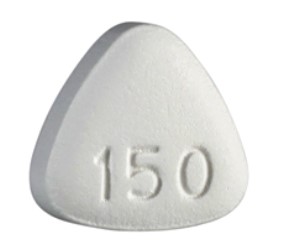 150 mgImage
 200 mgImage
 250 mgImage
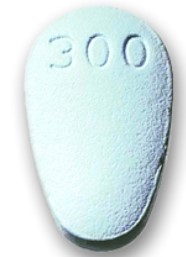 300 mgImage
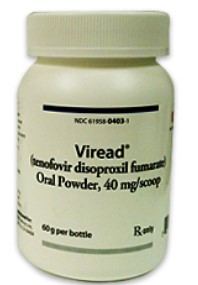 40 mg of tenofovir DF per 1 g of powderImage
Coformulations
Emtricitabine / Tenofovir DF (Truvada)
Doravirine / Lamivudine / Tenofovir DF (Delstrigo)
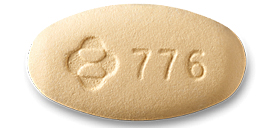 DOR 100 mg, 3TC 300 mg, TDF 300 mgImage
1 tablet daily Film-Coated Tablets Efavirenz / Emtricitabine / Tenofovir DF (Atripla)
 EFV 600 mg, FTC 200 mg, TDF 300 mgImage
1 tablet (EFV 600 mg, FTC 200 mg, TDF 300 mg) daily Film-Coated Tablets  EVG 150 mg, COBI 150 mg, FTC 200 mg, TDF 300 mgImage
1 tablet daily Film-Coated Tablets Emtricitabine / Rilpivirine / Tenofovir DF (Complera)
 FTC 200 mg, RPV 25 mg, TDF 300 mgImage
1 tablet daily Film-Coated Tablets
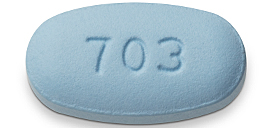


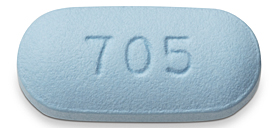
Clinical Use
Initial vs Subsequent Therapy
Adult and adolescent treatment guidelines of the U.S. Department of Health and Human Services designate TDF + emtricitabine as a dual-nucleoside backbone for use in a number of "recommended" regimens for initial therapy.
A direct comparison of TDF + lamivudine + efavirenz vs stavudine + lamivudine + efavirenz as initial therapy in antiretroviral-naive patients found the two treatments achieved similar rates of viral suppression, with 81% in each arm having viral loads of <50 copies/mL at week 48 (intention-to-treat analysis, with missing values counted as treatment failure).(2) A 48-week comparison of TDF + emtricitabine with zidovudine + lamivudine, each in combination with efavirenz in previously untreated patients, found higher rates of virologic suppression in the TDF + emtricitabine group (HIV RNA of <50 copies/mL in 80% vs 70%; p = .02), as well as greater increases in CD4 cell counts, and lower rates of treatment-limiting adverse effects.(3)
In another randomized study, treatment-naive patients were given TDF + emtricitabine or abacavir + lamivudine, in combination with either efavirenz or ritonavir-boosted atazanavir. In patients whose pretreatment HIV RNA levels were <<this should be greater than or equal to>>=100,000 copies/mL, significantly higher rates of early virologic failure occurred in abacavir + lamivudine recipients than in TDF + emtricitabine recipients.(4) In those with pretreatment HIV RNA of <100,000 copies/mL, rates of viral suppression were not statistically different in recipients of either nucleoside analogue pair, whether combined with efavirenz or atazanavir + ritonavir.(5)
In initial therapy, TDF was compared with TAF, each in a fixed-dose combination with elvitegravir, cobicistat, and emtricitabine.(6) By FDA snapshot analysis, 90% and 92% of study subjects, respectively, had HIV RNA levels of <50 copies/mL at 48 weeks; the difference was not statistically significant. The two ARV regimens yielded similar rates of HIV suppression in patients with pretreatment HIV RNA levels >100,000 copies/mL and those with <<this should be < or equal to>>=100,000 copies/mL. CD4 cell increases were 211 cells/µL for the TDF group and 230 cells/µL for the TAF group.
The nucleotide/nucleoside combination TDF + emtricitabine has been studied in many other regimens, including those with integrase inhibitors, nonnucleoside reverse transcriptase inhibitors, and protease inhibitors in initial therapy. It has proven to be a strong component of most initial therapies. Tenofovir also has an important role in subsequent therapy. It often retains some degree of activity against HIV strains with resistance to other nucleoside/nucleotide analogues,(13) and often is used in treatment-experienced patients.
Adverse Effects
TDF has been associated with renal impairment in some individuals. Cases of acute renal failure and Fanconi syndrome have been reported, but more common is slowly progressive kidney disease.(14) The cause is not definitively known but appears to involve proximal tubular impairment. One study found that coadministration of TDF with a protease inhibitor led to greater decreases in estimated glomerular filtration rate (eGFR) than did other combinations.(17) Other risk factors appear to include preexisting kidney disease.
In data available to date, tenofovir alafenamide appears to cause less significant changes in markers of renal function than TDF. In the comparison of TDF with TAF in initial therapy discussed above (see Use in Initial vs Subsequent Therapy) decreases in eGFR and worsening of markers of tubular function (eg, urinary protein and albumin) were greater at 48 weeks in the TDF group than in the TAF group(6) (see Tenofovir alafenamide profile for more information).
A switch study that randomized patients on TDF-containing regimens to continue their regimens or switch to the coformulation of elvitegravir/cobicistat/emtricitabine/TAF found that albuminuria, proteinuria, and other markers of tubular function worsened in those who continued TDF-containing ART, while creatinine increased slightly but proteinuria and albuminuria improved in patients switched to the TAF combination; differences were statistically significant.(18) The clinical significance of these differences in markers of renal function between the TAF-containing and TDF-containing regimens is not clear.
Renal function should be assessed before treatment with TDF, and regular monitoring should be performed for patients receiving TDF. TDF should be avoided, if possible, in patients with renal dysfunction; dosage reduction is recommended if the creatinine clearance is <50 mg/dL.
TDF may cause decreases in bone mineral density; these effects appear to be less with abacavir and with TAF. Monitoring and management of this effect is not certain.(19,(6),(18)
Interactions with Other Drugs
Coadministration of TDF with atazanavir lowers serum atazanavir levels and increases tenofovir levels (20); boosting atazanavir with low-dose ritonavir is recommended. Ritonavir and cobicistat may increase tenofovir levels; monitoring for renal toxicity is recommended.
Resistance
Resistance to TDF is associated with the selection of one or more of several resistance mutations.
Implications of tenofovir resistance for treatment with other antiretrovirals
The K65R mutation, which may be selected by tenofovir, is associated with resistance to tenofovir and to most other nucleoside analogues. Zidovudine, however, retains activity in the presence of this mutation.
Implications of resistance to other antiretrovirals for treatment with tenofovir
- Single and some double thymidine analogue resistance mutations do not appear to confer significant tenofovir resistance. However, in clinical trials, the presence of 3 or more thymidine analogue resistance mutations is associated with a decreased response to tenofovir, particularly if these mutations include M41L or L210W.(21)
- The presence of the M184V reverse transcriptase mutation, associated with resistance to lamivudine and emtricitabine, does not reduce sensitivity to tenofovir, and when it occurs with thymidine analogue mutations, it may increase the susceptibility of HIV to tenofovir.
- The K65R mutation, which may be selected by prior nucleoside analogue therapy, is associated with a decrease in sensitivity to tenofovir.
- The T69S insertion mutations, associated with resistance to multiple nucleoside analogues, are associated with resistance to tenofovir as well.
Tenofovir should be considered in choosing therapy for individuals experiencing viral recurrence on prior regimens, but resistance testing may be helpful in assessing the utility of tenofovir in the individual situation.
Special Uses
Treatment of hepatitis B
TDF is active against hepatitis B virus and is approved by the FDA for the treatment of hepatitis B. In small studies of patients coinfected with HIV and hepatitis B, addition of TDF has been associated with improvement in laboratory markers of hepatitis B progression.(22),(23) This improvement appears to extend to patients with lamivudine-resistant hepatitis B. A small randomized, controlled comparison of TDF and adefovir in coinfected patients found that TDF was not inferior to adefovir in reducing hepatitis B DNA levels and had a similar safety profile.(24)
DHHS guidelines recommend inclusion of TDF or TAF plus either lamivudine or emtricitabine in the antiretroviral regimens of patients coinfected with HIV and hepatitis B. This will result in treatment of both HIV and hepatitis B infections.
For patients with hepatitis B, there is a risk of hepatitis B exacerbation upon discontinuation of TDF.
Preexposure prophylaxis
In 2012, the FDA approved the combination of TDF + emtricitabine (FTC) for use as preexposure prophylaxis (PrEP) by HIV-uninfected adults and adolescents at risk of sexual acquisition of HIV; the U.S. Public Health Service also recommends it for people who use injection drugs who are at substantial risk of HIV acquisition. Approval was based on randomized controlled studies of daily oral TDF/ FTC in HIV-uninfected men who have sex with men and in heterosexual men and women; they found that HIV infection risk was reduced by 44% to 75% in the overall study groups.(25),(26),(27). However, in other studies of high-risk cisgender women, oral TDF/ FTC did not show protective effects.(29),(30) The varied study results appear to reflect differences in adherence to TDF /FTC. In studies that have shown protective benefit of TDF/FTC, effectiveness was strongly correlated with adherence, and some studies have shown efficacy of ≥90% in persons with higher TDF/FTC drug levels, which reflect closer adherence to PrEP. (26, 31 <<new>>)
More recent randomized controlled PrEP studies have compared TDF/FTC with TAF/FTC and with extended-release intramuscular cabotegravir. A study of daily TDF/FTC and daily TAF/FTC in at-risk men who have sex with men showed no significant difference in the rate of HIV infection in the two groups: 0.34 infections per 100 person year versus 0.16 infections per 100 person-years, respectively.(32<<new<<) Two studies, one in men who have sex with men and in transgender women, the other in cisgender women, compared daily oral TDF/FTC with once-monthly extended-release intramuscular cabotegravir. In both studies, rates of HIV infection were lower in the extended-release cabotegravir group (hazard ratio 0.34 in the first study, 0.11 in the second); differences between treatment groups were statistically significant.(33, 34 <<new>>)
Also, an intermittent “on-demand” (“2-1-1”) PrEP strategy of oral TDF/FTC has been studied in men who have sex with men. In this placebo-controlled trial, TDF/FTC was given in a specific dosing protocol timed before and after sexual activity; it was found to reduce incident HIV infection by 86% compared with placebo. This dosing strategy has been tested only in men who have sex with men, and pending further study it should not be used in others populations; it is not currently approved by the FDA.(35<<new>>)
Prophylactic TDF/FTC is intended only for those who are tested and confirmed to be HIV uninfected, and as part of a comprehensive prevention strategy that includes other risk-reduction measures and adherence support. Regular ongoing HIV testing is required to identify persons who become infected with HIV while on prophylaxis; TDF/FTC is not sufficient as treatment for established HIV infection, and in persons with HIV infection, its use risks the development of resistance to the antiretroviral agents.
Resources and Links
References
- 4Sax PE, Tierney C, Collier AC, et al; AIDS Clinical Trials Group Study A5202 Team. Abacavir-lamivudine versus tenofovir-emtricitabine for initial HIV-1 therapy. N Engl J Med. 2009 Dec 3;361(23):2230-40.
- 5Daar ES, Tierney C, Fischl MA, et al; AIDS Clinical Trials Group Study A5202 Team. Atazanavir plus ritonavir or efavirenz as part of a 3-drug regimen for initial treatment of HIV-1.Ann Intern Med. 2011 Apr 5;154(7):445-56.
- 6Sax PE, Wohl D, Yin MT, et al. Tenofovir alafenamide versus tenofovir disoproxil fumarate, coformulated with elvitegravir, cobicistat, and emtricitabine, for initial treatment of HIV-1 infection: two randomised, double-blind, phase 3, non-inferiority trials.
- 10
- 13Schooley RT, Ruane P, Myers RA, et al; Study 902 Team. Tenofovir DF in antiretroviral-experienced patients: results from a 48-week, randomized, double-blind study. AIDS. 2002 Jun 14;16(9):1257-63.
- 16
- 17Gallant JE, Moore RD. Renal function with use of a tenofovir-containing initial antiretroviral regimen.AIDS. 2009 Sep 24;23(15):1971-5.
- 18Mills A, Arribas JR, Andrade-Villanueva J, et al. Switching from tenofovir disoproxil fumarate to tenofovir alafenamide in antiretroviral regimens for virologically suppressed adults with HIV-1 infection: a randomised, active-controlled, multicentre, open-label, phase 3, non-inferiority study. Lancet Infect Dis. 2016 Jan;16(1):43-52. doi: 10.1016/S1473-3099(15)00348-5.
- 19McComsey GA, Kitch D, Daar ES, et al. Bone mineral density and fractures in antiretroviral-naive persons randomized to receive abacavir-lamivudine or tenofovir disoproxil fumarate-emtricitabine along with efavirenz or atazanavir-ritonavir: Aids Clinical Trials Group A5224s, a substudy of ACTG A5202. J Infect Dis. 2011 Jun 15;203(12):1791-801.
- 24Peters MG, Andersen J, Lynch P, et al; ACTG Protocol A5127 Team. Randomized controlled study of tenofovir and adefovir in chronic hepatitis B virus and HIV infection: ACTG A5127. Hepatology. 2006 Nov;44(5):1110-6.
- 25Grant RM, Lama JR, Anderson PL, et al; iPrEx Study Team. Preexposure chemoprophylaxis for HIV prevention in men who have sex with men. N Engl J Med. 2010 Dec 30;363(27):2587-99.
- 26Baeten JM, Donnell D, Ndase P, et al; PrEP Study Team. Antiretroviral prophylaxis for HIV prevention in heterosexual men and women. N Engl J Med. 2012 Aug 2;367(5):399-410.
- 27Thigpen MC, Kebaabetswe PM, Paxton LA, et al; TDF2 Study Group. Antiretroviral preexposure prophylaxis for heterosexual HIV transmission in Botswana. N Engl J Med. 2012 Aug 2;367(5):423-34.
- 28
- 29Van Damme L, Corneli A, Ahmed K, et al; FEM-PrEP Study Group. Preexposure prophylaxis for HIV infection among African women. N Engl J Med. 2012 Aug 2;367(5):411-22.
- 30Marrazzo JM, Ramjee G, Richardson BA, et al. Tenofovir-based preexposure prophylaxis for HIV infection among African women. N Engl J Med 2015;372:509–518.
- 31Grant RM, Anderson PL, McMahan V, et al. Uptake of pre-exposure prophylaxis, sexual practices, and HIV incidence in men and transgender women who have sex with men: a cohort study. Lancet Infect Dis. 2014 Sep;14(9):820-9. doi: 10.1016/S1473-3099(14)70847-3.
- 32Mayer KH, Molina JM, Thompson MA, et al. Emtricitabine and tenofovir alafenamide vs emtricitabine and tenofovir disoproxil fumarate for HIV pre-exposure prophylaxis (DISCOVER): primary results from a randomised, double-blind, multicentre, active-controlled, phase 3, non-inferiority trial. Lancet. 2020 Jul 25;396(10246):239-254. doi: 10.1016/S0140-6736(20)31065-5.
- 33Landovitz RJ, Donnell D, Clement ME, et al. Cabotegravir for HIV Prevention in Cisgender Men and Transgender Women. NEJM. August 12, 2021.385;7, 595-608.
- 34Delany-Moretlwe S, Hughes J, Bock P, et al. Cabotegravir for the prevention of HIV-1 in women: results from HPTN 084, a phase 3, randomised clinical trial. Lancet. 2022 May 7;399(10337):1779-1789. doi: 10.1016/S0140-6736(22)00538-4.
- 35Molina J-M, Capitant C, Spire B, et al. On-Demand Preexposure Prophylaxis in Men at High Risk for HIV-1 Infection. N Engl J Med 2015; 373:2237-2246. DOI: 10.1056/NEJMoa1506273.