
- Abbreviation: BICAntiretroviral Subclass:Integrase inhibitors
Background
- U.S. Manufacturer:
Approval
Bictegravir (BIC) was approved by the U.S. Food and Drug Administration (FDA) in 2018 for use in adults and in 2019 for use in pediatric patients who weigh at least 25 kg. It is available only as part of a coformulation that includes the nucleoside analogues tenofovir alafenamide (TAF) and emtricitabine (FTC). BIC/TAF/FTC is indicated for initial therapy for adults with HIV-1 infection and as a replacement regimen for persons who are on a stable antiretroviral regimen with virologic suppression and whose virus has no resistance to bictegravir, TAF, or emtricitabine.
Approval of BIC/TAF/FTC was based largely on two randomized, double-blind Phase 3 studies in adults showing that initial treatment with this combination resulted in rates of HIV viral suppression that were comparable with those achieved by dolutegravir/abacavir/lamivudine and by dolutegravir + TAF/FTC. (1),(2)
Generic Approval
NA
Formulations and Dosing
Bictegravir is currently available only in a coformulation with TAF and emtricitabine (FTC).
- There are no food restrictions.
- No dosage adjustment is required is required for patients with creatinine clearance ≥30 mL/min. Not recommended for patients with creatinine clearance <30 mL/min.
- Bictegravir has not been studied and is not recommended in patients with severe (Child-Pugh Class C) liver disease.
- Bictegravir has not been studied in pregnant persons.
- Bictegravir interacts with other medications; dosage adjustments may be required and certain combinations are contraindicated. For more information about drug interactions, see "Interactions with Other Drugs" below and refer to the Database of Antiretroviral Drug Interactions.
- Consult product labeling for detailed dosing information.
Adult Dosing
Dosage Formulation Notes BIC 50 mg + FTC 200 mg + TAF 25 mg QD Coformulated Tablet Only available as a component of Biktarvy, a fixed-dose combination tablet (BIC 50 mg, FTC 200 mg, TAF 25 mg)
Abbreviation: QD = Once daily
Pediatric Dosing
Age Dosage Formulation Weight BIC 50 mg + FTC 200 mg + TAF 25 mg QD Coformulated Tablet ≥25 kg <<see Word doc for edits>> Abbreviation: QD = Once daily
Formulations
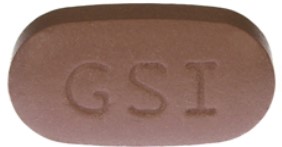 50 mg of bictegravir, 200 mg of emtricitabine , 25 mg of tenofovir alafenamide
Image
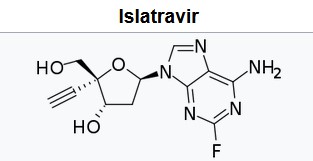 Image
Image
Coformulations
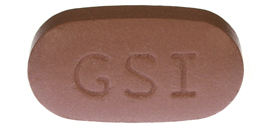 BIC 50 mg, FTC 200 mg, TAF 25 mgImage
1 tablet daily Film-Coated Tablets
Clinical Use
Initial vs Subsequent Therapy
Adult and adolescent treatment guidelines of the U.S. Department of Health and Human Services (DHHS) include the coformulation bictegravir/TAF/emtricitabine among the "recommended initial regimens for most people with HIV."
Bictegravir was studied in two Phase 3 randomized double-blind studies in initial therapy, described above in "Approval." In the first, the combination of BIC/TAF/FTC was compared with coformulated dolutegravir/abacavir/lamivudine. At 48 weeks, by snapshot analysis, 92% of recipients of the bictegravir regimen and 93% of recipients of the dolutegravir regimen had HIV RNA suppression to <50 copies/mL; the results met criteria for noninferiority of the bictegravir regimen (p = .78).(1) In the second study, BIC/TAF/FTC was compared with dolutegravir plus coformulated TAF/FTC. At 48 weeks, by snapshot analysis, HIV RNA suppression to <50 copies/mL was seen in 89% of the bictegravir group and 93% of the dolutegravir group; these results also met criteria for noninferiority.(2)
Two Phase 3 switch studies evaluated the efficacy and safety of switching patients with HIV RNA suppression on stable antiretroviral regimens (with no HIV resistance to integrase inhibitors or nucleoside analogues) to bictegravir/TAF/emtricitabine. An open-label study randomized patients on either atazanavir or darunavir (each with a pharmacokinetic booster) plus 2 nucleoside analogues to switch to the bictegravir coformulation or to continue their current regimen. After 48 weeks, virologic suppression to <50 copies/mL was maintained in 92% of the subjects who switched to BIC/TAF/FTC and 89% of those who continued their previous regimen; the difference was not statistically significant.(3) A double-blind study randomized patients on either dolutegravir + abacavir/lamivudine (either as a single-pill combination or as 2 separate pills) to switch to BIC/TAF/FTC or continue their current regimen. At 48 weeks, HIV RNA remained <50 copies/mL in 94% of the switch group and 95% of the group that did not switch.(4)
Bictegravir has not been studied in subsequent therapy, or in patients whose HIV virus has mutations that confer resistance to integrase inhibitors.
Adverse Effects
In the clinical studies described above, symptomatic adverse reactions to the BIC/TAF/FTC coformulation were uncommon but included nausea, diarrhea, and headache. Weight gain and rash also have been reported. Laboratory abnormalities included increases in total bilirubin and in serum creatinine. Bictegravir inhibits tubular secretion of creatinine without affecting the actual glomerular filtration rate. In Phase 3 studies of initial therapy, serum creatinine increased by a median of 0.10 mg/dL by week 4 and remained stable to week 48.(1),(2)
It is important to assess patient motivation and discuss possible adverse effects and strategies for their management before treatment with bictegravir is initiated.
Bictegravir has not been studied in pregnant persons.Interactions with Other Drugs
Bictegravir is a substrate of hepatic isoenzyme CYP3A4 and uridine diphosphate glucuronosyltransferase (UGT) 1A1. Other medications that induce these enzymes (particularly if they induce both) can reduce plasma concentrations of bictegravir, whereas drugs that inhibit them can increase plasma concentrations of bictegravir. The antimycobacterial drugs rifampin and rifapentine; the antiseizure drugs carbamazepine, phenytoin, and phenobarbital; and the herb and St. John's wort are among the drugs that may substantially decrease bictegravir plasma levels. Atazanavir may greatly increase bictegravir plasma levels.(5)
Bictegravir also inhibits the renal transporters organic cation transporter 2 (OCT2) and multidrug and toxin extrusion transporter 1 (MATE1) and may increase levels of drugs that are substrates of these transporters, for example, metformin.(5)
Polyvalent cations (e.g., aluminum, calcium, iron, and magnesium cations), including those contained in some antacids, laxatives, buffered medications, and mineral supplements, may interfere with gastrointestinal absorption of bictegravir. Polyvalent cations should be taken <<should be greater than/equal to>>2 hours before or <<should be greater than or equal to>> 2 hours after bictegravir, though calcium or iron supplements may be taken with bictegravir if they are also taken with food. Proton pump inhibitors and H2 receptor antagonists do not affect bictegravir concentrations.(6)
Information on drug interactions should be consulted, as dosage adjustments are frequently required and some combinations are contraindicated.
Resistance
Resistance to bictegravir is associated with the selection of 1 or more of several resistance mutations; however, the resisitance profile of bictegravir has not been characterized fully. In vitro studies of bictegravir have shown the emergence of a number of integrase resistance mutations, including M50I, S153F, and R263, while the Phase 3 clinical studies described above showed no emergent, therapeutically significant resistance to bictegravir in the few subjects who experienced virologic failure. A number of case reports have described the emergence fo the R263K muktation and other integrase mutations in the setting of virologic failure of BIC/TAF/FTC(8)(9)(10) Resistance associated with previous exposure to other integrase inhibitors is likely to affect the efficacy of bictegravir, but this has yet to be evaluated in clinical studies.
Implications of bictegravir resistance for treatment with other antiretrovirals
In the Phase 3 studies described above (see Use in Initial vs Subsequent Therapy), no emergent resistance mutations were reported in previously-untreated persons who received bictegravir. Clinical case reports have described the emergence of the integrase R263K resistance mutation, usually together with the reverse transcriptase muation M184V/I.(8)(9)(10) In vitro studies have shown the emergence of M50I, S153F/Y, R263K, and other mutations; these conferred up to 3-fold decrease in bictegravir susceptibility and resulted in low-level phenotypic resistance to bictegravir, dolutegravir, and elvitegravir.(6)(7)
Bictegravir mutations are not expected to affect sensitivity to other classes of antiretroviral agents.
Implications of resistance to other antiretrovirals for bictegravir treatment
In vitro studies suggest that susceptibility to bictegravir is decreased by some resistance mutations selected by other integrase inhibitors, particularly if more than one mutation is present. Substitutions at the integrase positions 140 and 148 may be particularly impactful; other integrase mutations that affect bictegravir susceptibility include L74M, T97A, G118R, E138A/K, Y143C/R, and N155H. To date there have been no clinical studies of bictegravir in persons with preexisting integrase inhibitor-associated mutations.(6)(7)
Resistance mutations selected by other classes of antiretrovirals are not expected to contribute to bictegravir resistance.
Resources and Links
References
- 1Gallant J, Lazzarin A, Mills A, et al. Bictegravir, emtricitabine, and tenofovir alafenamide versus dolutegravir, abacavir, and lamivudine for initial treatment of HIV-1 infection (GS-US-380-1489): a double-blind, multicentre, phase 3, randomised controlled non-inferiority trial. Lancet. 2017 Nov 4;390:2063-72.
- 2Sax PE, Pozniak A, Montes ML, et al. Coformulated bictegravir, emtricitabine, and tenofovir alafenamide versus dolutegravir with emtricitabine and tenofovir alafenamide, for initial treatment of HIV-1 infection (GS-US-380-1490): a randomised, double-blind, multicentre, phase 3, non-inferiority trial. Lancet. 2017 Nov 4;390:2073-82.
- 3Daar E, DeJesus E, Ruane P, et al. Efficacy and safety of switching to fixed-dose bictegravir, emtricitabine, and tenofovir alafenamide from boosted protease inhibitor-based regimens in virologically suppressed adults with HIV-1: week 48 results of a randomised, multicentre, phase 3, noninferiority trial. Lancet HIV. 2018 Jul;5(7):e347-e356.doi:10.1016/S2352-3018(18)30091-2.
- 4Molina JM, Ward D, Brar I, et al. Switching to fixed-dose bictegravir, emtricitabine, and tenofovir alafenamide from dolutegravir plus abacavir and lamivudine in virologically suppressed adults with HIV-1: 48 week results of a randomised, double-blind, multicentre, active-controlled, phase 3, noninferiority trial. Lancet HIV. 2018 Jul:5(7):e357-e365. doi:10.1016/S2352-3018(18)30092-4.
- 5Zhang H, Custodio JM, Wei X, et al. Clinical pharmacology of the HIV integrase strand transfer inhibitor bictegravir. In: Program and abstracts of the 2017 Conference on Retroviruses and Opportunistic Infections; February 13-16, 2017; Seattle. Abstract 40.
- 6Biktarvy prescribing information. Gilead Sciences: Foster City, CA.
- 7Tsiang M, Jones GS, Goldsmith J, et al. Antiviral activity of bictegravir (GS-9883), a novel potent HIV-1 integrase strand transfer inhibitor with an improved resistance profile. Antimicrob Agents Chemother. 2016 Nov 21;60(12):7086-97.
- 8Chamberlain N, Mena L, Brock JB. Case Report: Emergent Resistance in a Treatment-Naive Person With Human Immunodeficiency Virus Under Bictegravir-Based Therapy. Open Forum Infect Dis. 2021 Jun 4;8(6):ofab297. doi: 10.1093/ofid/ofab297.
- 9Lozano AB, Chueca N, De Salazar A, et al. Failure to bictegravir and development of resistance mutations in an antiretroviral-experienced patient. Antiviral Res. 2020 Jul;179:104717. doi: 10.1016/j.antiviral.2020.104717.
- 10Stolll M, Braun P, Wiesmann F, Knechten H. Development of integrase inhibitor resistance under first-line treatment with bictegravir. HIV Glasgow-Virtual, 5-8 October 2020. Abstract P125. In: J Int AIDS Soc. 2020 Oct; 23(Suppl 7). doi: 10.1002/jia2.25616.
-