
- Abbreviation: 3TCAntiretroviral Subclass:Nucleoside reverse transcriptase inhibitors
Background
- U.S. Manufacturer:
Approval
FDA approval of lamivudine was granted in 1995 for adult and pediatric use. Initial approval (for use in combination with zidovudine) was based on increases in CD4 T-lymphocyte counts on a regimen of zidovudine + lamivudine compared with either drug alone, and also compared with the combination of zidovudine + zalcitabine.(1) As more definitive evidence of clinical benefit (delayed disease progression) became available, approval was extended to use "in combination with other antiretroviral agents."
Generic Approval
The FDA has approved generic versions of lamivudine for use in the United States and has granted "tentative approval" status to a number of generic versions for purchase and use as part of the President's Emergency Plan for AIDS Relief (PEPFAR) in resource-limited countries.
Formulations and Dosing
Lamivudine is available in tablet formulations for adult and pediatric dosing and in oral solution; it is approved for once-daily or twice-daily dosing.
Lamivudine also is available in a number of coformulations with other antiretroviral agents: in combination with abacavir (Epzicom, Kivexa, others), with tenofovir DF (Cimduo, Temixys), with zidovudine (Combivir, others), with abacavir + dolutegravir (Triumeq), with dolutegravir (Dovoto), with doravirine + tenofovir DF (Delstrigo), with efavirenz + tenofovir DF (Symfi, Symfi Lo), and with abacavir + zidovudine (Trizivir).
- There are no food restrictions.
- Dosage adjustment is recommended in renal insufficiency.
- Dosage reduction is not necessary in hepatic impairment.
- Please consult product labeling for detailed dosing information.
Adult Dosing
Dosage Formulation Notes 150 mg BID 300 mg QD Abbreviations: BID = twice daily; QAM = every morning; QD = once daily; QPM = every evening; Wt = weight
Pediatric Dosing
Age Dosage Formulation Weight Infants, age <30 days 2 mg/kg BID Age 3 months to 16 years 10 mg/kg QD or 5 mg/kg BID; maximum 300 mg per day
Oral Solution 150 mg QD or 75 mg BID
Tablet (unboosted) 14 to <20 kg 225 mg QD or 75 mg QAM + 150 mg QPM Tablet ≥20 to <25 kg 300 mg QD or 150 mg BID (adult dosage) Tablet ≥25 kg Abbreviations: BID = twice daily; QAM = every morning; QD = once daily; QPM = every evening; Wt = weight
Lamivudine is not FDA approved for children <3 months of age. However, it has been studied in younger children; usual doses are indicated.
Tablet formulation is preferred for children who weigh =14 kg and who are able to take a solid medication.
Formulations
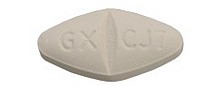 150 mgImage
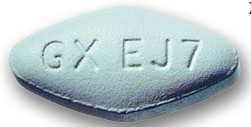 300 mgImage
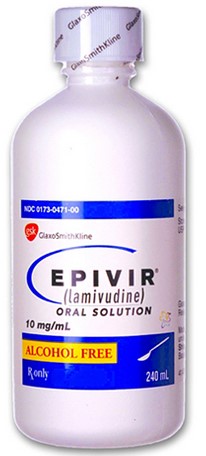 10-mg/mLImage
Coformulations
Abacavir / Lamivudine / Zidovudine (Trizivir)
Abacavir / Dolutegravir / Lamivudine (Triumeq)
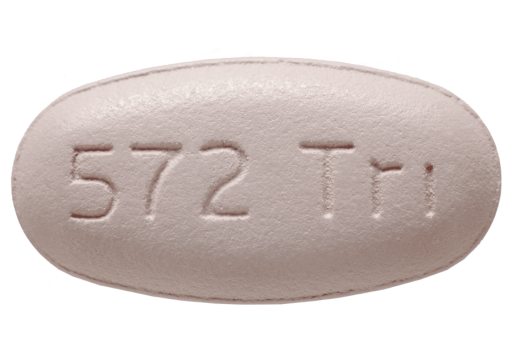 ABC 600 mg, DTG 50 mg, 3TC 300 mgImage
1 tablet daily Film-Coated Tablets Dolutegravir / Lamivudine (Dovato)
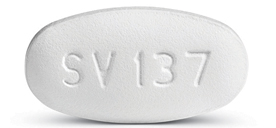 DTG 50 mg, 3TC 300 mgImage
1 tablet daily Film-Coated Tablets Doravirine / Lamivudine / Tenofovir DF (Delstrigo)
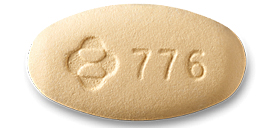 DOR 100 mg, 3TC 300 mg, TDF 300 mgImage
1 tablet daily Film-Coated Tablets Abacavir / Lamivudine (Epzicom)
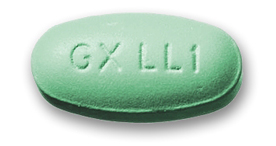
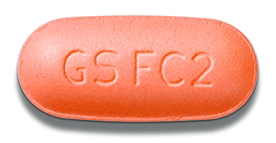
Clinical Use
Initial vs Subsequent Therapy
For initial therapy, adult and adolescent treatment guidelines of the U.S. Department of Health and Human Services designate the combination of dolutegravir + abacavir + lamivudine as a "recommended" regimen for most people, dolutegravir + lamivudine as a "recommended" regimen for specified clinical scenarios, and other lamivudine-containing regimens among recommended options for "certain clinical situations." The guidelines also state that lamivudine may be used in place of emtricitabine and vice versa.
In initial therapy, many antiretroviral combinations containing lamivudine and a second nucleoside analogue plus an active agent from another class have been found to be effective at suppressing HIV viral load and increasing CD4 cell counts, and delaying clinical progression of HIV disease.
Several triple-nucleoside analogue combinations containing lamivudine have been shown to have high rates of virologic failure in previously untreated individuals.(2),(3),(4),(5) Those regimens should be avoided.
Lamivudine has an important role in subsequent therapy, even in situations in which resistance to lamivudine has developed. Despite the presence of the signature lamivudine (or emtricitabine) resistance mutation at reverse transcriptase codon 184 (M184I/V), lamivudine may have a suppressive effect on HIV replication and may increase susceptibility to certain other nucleoside analogues (eg, tenofovir, zidovudine).(6),(7)
Adverse Effects
Symptomatic side effects of lamivudine are rare and typically are difficult to distinguish from those of the other antiretrovirals with which it is combined. In pediatric studies, lamivudine has been associated with pancreatitis; thus, combination with other medications associated with pancreatitis requires close monitoring in children.
There is evidence that nucleoside analogues may be associated with mitochondrial toxicity leading to potentially serious long-term side effects such as lactic acidosis and disorders of lipid metabolism.(8) Lamivudine does not appear to be a major cause of mitochondrial toxicity, but the extent to which lamivudine may contribute to such effects is not known precisely.
Resistance to lamivudine may develop with only a single viral mutation in the setting of suboptimal viral suppression. It is therefore essential to emphasize patient adherence, assess motivation, and discuss possible side effects and strategies for their management before any regimen containing lamivudine is initiated.
Interactions with Other Drugs
Clinically significant drug-drug interactions involving lamivudine appear to be uncommon. Lamivudine and emtricitabine have no significant additive potency and share nearly identical resistance profiles; they should not be used together.
Resistance
Resistance to lamivudine is most frequently associated with the selection of a single mutation at codon 184 (M184V or M184I). Selection of this mutation may occur within weeks of initiating therapy that is not fully suppressive. Failure of combination regimens containing lamivudine may be associated with viral resistance to lamivudine without detectable resistance to other components of the antiretroviral regimen.(9)(10) To avoid long-term treatment failure resulting from resistance, lamivudine should be used only in regimens that are expected to be fully suppressive of viral replication.
Implications of lamivudine resistance for treatment with other antiretrovirals
Laboratory strains of HIV resistant to lamivudine by virtue of a mutation at codon 184 show resistance to emtricitabine and may show resistance to abacavir and didanosine. Mutation at codon 184 may reverse resistance associated with thymidine analogues and tenofovir.
Implications of resistance to other antiretrovirals for treatment with lamivudine
HIV strains mutations associated with thymidine analogues (at codons 41, 67, 70, 210, 215, or 219) or didanosine (codon 74) remain sensitive to lamivudine, whereas those with mutation at codon 65 (associated with tenofovir, abacavir, and didanosine) show decreased susceptibility to lamivudine.
Special Uses
Lamivudine is active against hepatitis B virus, but resistant HBV is observed to emerge over months in the setting of treatment with lamivudine alone.(11),(12) DHHS guidelines recommend inclusion of either lamivudine or emtricitabine, plus tenofovir, in the antiretroviral regimens of persons coninfected with HIV and hepatitis B. This will result in treatment of both HIV and hepatitis B infections.
Individuals with HIV and hepatitis B may experience an exacerbation of chronic active hepatitis B if lamivudine is discontinued.(13) The formulation of lamivudine available specifically for the treatment of hepatitis B is of a lower dose that is not appropriate for treatment of HIV.
Resources and Links
References
- 5Jemsek J, Hutcherson P, Harper E. Poor virologic responses and early emergence of resistance in treatment naive, HIV-infected patients receiving a once daily triple nucleoside regimen of didanosine, lamivudine, and tenofovir DF. In: Program and abstracts of the 11th Conference on Retroviruses and Opportunistic Infections; February 8-11, 2004; San Francisco. Abstract 51.
- 6Campbell TB, Shulman NS, Johnson SC, et al. Antiviral activity of lamivudine in salvage therapy for multidrug-resistant HIV-1 infection. Clin Infect Dis. 2005 Jul 15;41(2):236-42.
- 7Castagna A, Danise A, Menzo S, et al. Lamivudine monotherapy in HIV-1-infected patients harbouring a lamivudine-resistant virus: a randomized pilot study (E-184V study). AIDS. 2006 Apr 4;20(6):795-803.