
- Abbreviation: COBIAntiretroviral Subclass:Pharmacokinetic enhancers
Background
- U.S. Manufacturer:
Approval
Cobicistat is a pharmacokinetic enhancer that has no activity against HIV. It was granted approval by the U.S. Food and Drug Administration (FDA) in August 2012 as part of a coformulation that also includes the integrase inhibitor elvitegravir and the two nucleoside/nucleotide analogues (NRTIs) tenofovir and emtricitabine. In this fixed-dose coformulation, it is intended for use in initial therapy of adults with HIV-1 infection. In 2014, cobicistat was approved for use as a free-standing agent in combination with either atazanavir or darunavir, and in 2015, fixed-dose combinations of cobicistat + atazanavir and cobicistat + darunavir were approved.
Initial approval was based primarily on 48-week results of 2 Phase III studies showing that previously untreated individuals who received elvitegravir/cobicistat/tenofovir/emtricitabine had rates of viral suppression and CD4 T-cell increases that were similar to those of individuals who received efavirenz + NRTIs or atazanavir+ ritonavir + 2 NRTIs.(1)(2)
Generic Approval
NA
Formulations and Dosing
Cobicistat is available in a number of fixed-dose combination tablet formulations that include either with elvitegravir, atazanavir, or darunavir, with or without emtricitabine and tenofovir. It also is available as a single agent.
- Cobicistat should be taken with food.
- Cobicistat interacts with a number of antiretroviral medications; see product labeling for further information.
- Regimens containing both cobicistat and tenofovir (including the fixed-dose combination elvitegravir/cobicistat/tenofovir/emtricitabine) should not be initiated in patients with CrCl <70 mL/minand should be discontinued in those with CrCl <50 mL/min.
- Dosage adjustment for mild or moderate hepatic impairment is not required. No data are available to guide use in persons with severe liver disease.
- Cobicistat is not recommended for use during pregnancy. For detailed dosing information, see the product labeling at Drugs@FDA
With atazanavir or darunavir:
- Cobicistat 150 mg daily + atazanavir 300 mg daily#
- Cobicistat 150 mg daily + darunavir 800 mg daily#*
With elvitegravir in fixed-dose combination tablet:
- Elvitegravir 150 mg + cobicistat 150 mg + tenofovir alafenamide 10 mg + emtricitabine 200 mg, QD, 1 tablet QD (Genvoya)
- Elvitegravir 150 mg + cobicistat 150 mg + tenofovir DF 300 mg + emtricitabine 200 mg, QD, 1 tablet QD (Stribild)
Abbreviations: QD = once daily
# Either fixed-dose combination tablets or individual agents may be used.
* For patients with no mutations associated with resistance to darunavir. Cobicistat is not approved for twice-daily dosing with darunavir.Pediatric Dosing
Age Dosage Formulation Weight With atazanavir: cobicistat 150 mg daily + atazanavir 300 mg daily* Tablet =35 kg With atazanavir: not FDA approved Tablet <35 kg With darunavir: cobicistat 150 mg daily + darunavir 800 mg daily*
Tablet ≥40 kg With darunavir: not FDA approved Tablet <40 kg With elvitegravir in fixed-dose combination tablet: elvitegravir 150 mg + cobicistat 150 mg + tenofovir alafenamide 10 mg + emtricitabine 200 mg, QD, 1 tablet QD (Genvoya)
Tablet ≥25 kg ≥12 years Elvitegravir 150 mg + cobicistat 150 mg + tenofovir DF 300 mg + emtricitabine 200 mg, QD, 1 tablet QD (Stribild) Tablet ≥35 kg Not FDA approved Tablet <25 kg Abbreviations: QD = once daily
# Either fixed-dose combination tablets or individual agents may be used.
* For patients with no mutations associated with resistance to darunavir. Cobicistat is not approved for twice-daily dosing with darunavir.Formulations
 Image
Image
Coformulations
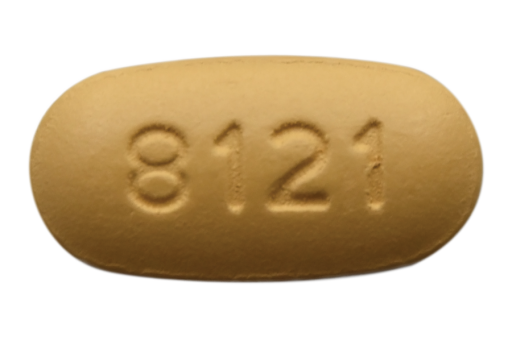 DRV 800 mg, COBI 150 mg, FTC 200 mg, TAF 10 mgImage
1 tablet daily Film-Coated Tablets 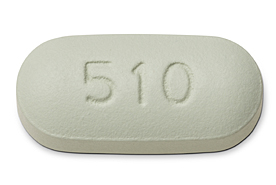 EVG 150 mg, COBI 150 mg, FTC 200 mg, TAF 10 mgImage
1 tablet daily Tablet 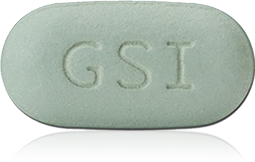 EVG 150 mg, COBI 150 mg, FTC 200 mg, TDF 300 mgImage
1 tablet daily Film-Coated Tablets
Clinical Use
Cobicistat is an inhibitor of cytochrome P450 3A (CYP3A) enzymes. It has no activity against HIV but is intended for use as a pharmacokinetic enhancer of antiretroviral agents that are metabolized by these enzymes. It currently is approved for use only with the integrase inhibitor elvitegravir and the protease inhibitors atazanavir and darunavir (once daily, at the dosages listed above).
Initial vs Subsequent Therapy
Adult and adolescent treatment guidelines of the U.S. Department of Health and Human Services designate cobicistat in combination with elvitegravir + tenofovir alafenamide + emtricitabine or elvitegravir + tenofovir DF + emtricitabine as "recommended" regimens for use in initial treatment of HIV infection. They list specific regimens containing cobicistat-boosted atazanavir and cobicistat-boosted darunavir among "recommended initial regimens in certain clinical situations."
In 2 Phase III studies in antiretroviral-naive adults, cobicistat was used as a pharmacokinetic enhancer of elvitegravir. In the first, the fixed-dose coformulation of elvitegravir/cobicistat/tenofovir/emtricitabine was compared with atazanavir + ritonavir + tenofovir/emtricitabine.(1) By snapshot analysis, 89.5% of elvitegravir + cobicistat recipients and 87% of atazanavir+ ritonavir recipients had HIV RNA suppression to <50 copies/mL at 48 weeks; the difference was not statistically significant. In the second study, elvitegravir/cobicistat/tenofovir/emtricitabine was compared with efavirenz/tenofovir/emtricitabine.(2) By snapshot analysis, 88% of elvitegravir + cobicistat recipients and 84% of efavirenz recipients had HIV RNA levels of <50 copies/mL at 48 weeks; the difference was not statistically significant. Mean CD4 increases were similar in the different treatment groups.
In a Phase III study of initial treatment, cobicistat was compared with ritonavir as a pharmacokinetic enhancer of atazanavir, each combination given with tenofovir and emtricitabine in initial treatment. At week 48, by snapshot analysis, rates of HIV suppression to <50 copies/mL were 85% in the atazanavir + cobicistat group and 87% in the atazanavir + ritonavir group; the difference was not statistically significant.(3) An earlier Phase II study also compared cobicistat with ritonavir in combination with atazanavir plus tenofovir/emtricitabine in treatment-naive patients. At 48 weeks, by intention-to-treat analysis, HIV RNA was suppressed to <50 copies/mL in 82% of the cobicistat group and 86% of the ritonavir group; CD4 cell increases were 230 cells/µL and 206 cells/µL, respectively.(4) A single-arm open label Phase III evaluation of darunavir + cobicistat + 2 NRTIs in patients without darunavir-associated resistance mutations showed HIV suppression to <50 copies/mL in 83% of the study group at 48 weeks.(5)
Cobicistat has not been studied in subsequent therapy.
Adverse Effects
Symptomatic side effects of cobicistat include nausea, diarrhea, and fatigue. When given with atazanavir, it increases the likelihood of icterus.
Cobicistat inhibits renal tubular secretion of creatinine and increases serum creatinine levels, resulting in a decrease in estimated glomerular filtration rate (GFR) without a true decline in GFR.(6) In Phase II and III studies, mean elevations in serum creatinine of approximately 0.14 mg/dL (and mean decreases in estimated GFR of approximately 14 mL/min) were observed in the first 2 weeks of treatment and remained stable to 48 weeks.(1),(2),(3),(4),(7) Cases of acute renal failure and Fanconi syndrome have been reported in patients given the fixed-dose combination elvitegravir/cobicistat/tenofovir/emtricitabine.(4),(7) All study subjects also received tenofovir, an NRTI with known potential for renal toxicity; the relative roles of cobicistat, tenofovir, and other factors are not clear. Also, optimal clinical practices for distinguishing benign effects of cobicistat on creatinine (and estimated GFR) from true declines in renal function have not been established; monitoring of renal parameters is recommended. Cobicistat has not been well studied in individuals with CrCl <70 mL/min, and initiation in these persons is not recommended. Renal function should be assessed before treatment with cobicistat.
It is important to assess patient motivation and discuss possible adverse effects and strategies for their management before treatment with cobicistat is initiated.
Cobicistat has not been studied in pregnant women.
Interactions with Other Drugs
Cobicistat is an inhibitor of cytochrome P450 3A (CYP3A) and 2D6 (CYP2D6) enzymes as well as an inhibitor of cellular transporters p-glycoprotein, BCRP, OATP1B1, and OATP1B3. Thus, cobicistat may cause clinically significant alterations in serum levels of a variety of other drugs, including other antiretrovirals, that are metabolized by or are substrates of these systems. Management of most of these interactions has not been established.
For example, cobicistat may increase levels of certain calcium channel blockers, beta-blockers, HMG-CoA reductase inhibitors (statins), antiarrhythmics, sedative-hypnotics, erectile dysfunction agents, inhaled corticosteroids, and norgestimate. It increases serum levels of the integrase inhibitor elvitegravir and of several protease inhibitors including atazanavir and darunavir.(1),(2),(3),(4), (7),(8),(9),(10) It is FDA approved as a pharmacokinetic enhancer of elvitegravir, atazanavir, and darunavir (given once daily).(4) Pending additional studies, twice-daily use of cobicistat with darunavir is not recommended, nor is use of cobicistat with other protease inhibitors or administration with both elvitegravir and a protease inhibitor. Similarly, coadministration with the nonnucleoside reverse transcriptase inhibitors efavirenz, etravirine, and nevirapine is not recommended.
Cobicistat in turn is metabolized by CYP3A and CYP2D6, so drugs that induce or inhibit the action of this isoenzyme may alter serum cobicistat concentrations. Azole antifungals and clarithromycin may increase serum cobicistat concentrations (and cobicistat may simultaneously increase serum levels of the coadministered antimicrobial). Rifabutin and some antiepileptic medications (eg, carbamazepine and phenytoin) are among the medications that may decrease cobicistat levels.
Adequate pharmacokinetic data and clinical correlates are not yet available for many potential interactions. Information on drug interactions should be consulted, as dosage adjustments are frequently required and some combinations are contraindicated.
For additional information, see the Database of Antiretroviral Drug Interactions.
Resistance
Cobicistat has no activity against HIV and thus does not select for resistance mutations.
Resources and Links
References
- 3Gallant J, Koenig E, Andrade-Villanueva J, et al. Cobicistat versus ritonavir as pharmacoenhancers in combination with atazanavir plus tenofovir disoproxil fumarate/emtricitabine: phase 3 randomized, double blind, active-controlled trial, week 48 results. In: Program and abstracts of the XIX International AIDS Conference; July 22-27, 2012; Washington. Abstract TUAB0103
- 7Stribild [prescribing information]. Gilead Sciences: Foster City, CA; August 2012.
- 9Mathias A, Liu HC, Warren D, et al. Relative bioavailability and pharmacokinetics of darunavir when boosted with the pharmacoenhancer GS-9350 versus ritonavir. In: Program and abstracts of the 11th international Workshoop on Clinical Pharmacology of HIV Therapy; April 7-9, 2010; Sorrento, Italy. Abstract 28.
- 10Ramanathan S, Wang H, Szwarcberg J, et al. Safety/tolerability, pharmacokinetics and boosting of twice-daily cobicistat administered alone or in combination with darunavir or tipranavir. In: Program and abstracts of the 13th International Workshop on Clinical Pharmacology of HIV Therapy; April 16-18, 2012; Barcelona. Abstract P_08.